This is probably the question we’re asked most often before a sanding project in Brossard, Longueuil, or Saint-Lambert: “Will it create a lot of dust in our home?” The honest answer is: much less than before, but not zero. So-called “dust-free” sanding technology has made tremendous progress over the past ten years, and today, a good team with the right equipment can reduce dust by more than 95%.
In this article, we explain how dustless sanding really works, what you can realistically expect in terms of cleanliness, and how our team at Artisan Espace Design protects your home during work on the South Shore.
What Is Dust-Free (Dustless) Floor Sanding?
The term “dust-free” can be misleading. In reality, it’s a high-performance suction system integrated directly into the sander. Unlike a traditional sander that releases dust into the ambient air, dustless models use an industrial vacuum (HEPA or equivalent) connected in a closed circuit to the machine.
Specifically, while the abrasive paper disc sands the wood surface, the vacuum extracts the dust at the sanding head level, before it can disperse into the air. The result is a very significant—but never total—reduction in airborne particles.
How Does the HEPA Suction System Work?
The best dustless sanders on the market use vacuums with HEPA (High Efficiency Particulate Air) filters. These filters capture particles as fine as 0.3 microns with 99.97% efficiency. To put this in perspective, a human hair measures approximately 70 microns—HEPA filters therefore capture particles approximately 200 times finer.
This level of filtration is particularly important in South Shore homes where families with young children or people with respiratory issues live. Fine wood dust can infiltrate everywhere and remain suspended for hours in unprotected rooms.
The 5 Steps of Clean Sanding According to Artisan Espace Design
1. Preparing the Work Area
Before even starting the sander, our team takes the time to properly isolate the area. We close the doors to adjacent rooms and seal them with plastic and masking tape. Ventilation vents and the heating system’s air return (very important in Quebec!) are temporarily blocked to prevent dust from circulating throughout the house.
We also cover light sources and baseboard heaters, and move furniture and objects likely to accumulate fine dust. This step takes between 30 minutes and 2 hours depending on the area, but it makes all the difference for the cleanliness of the rest of the house.
2. Floor Sanding with Belt Sander
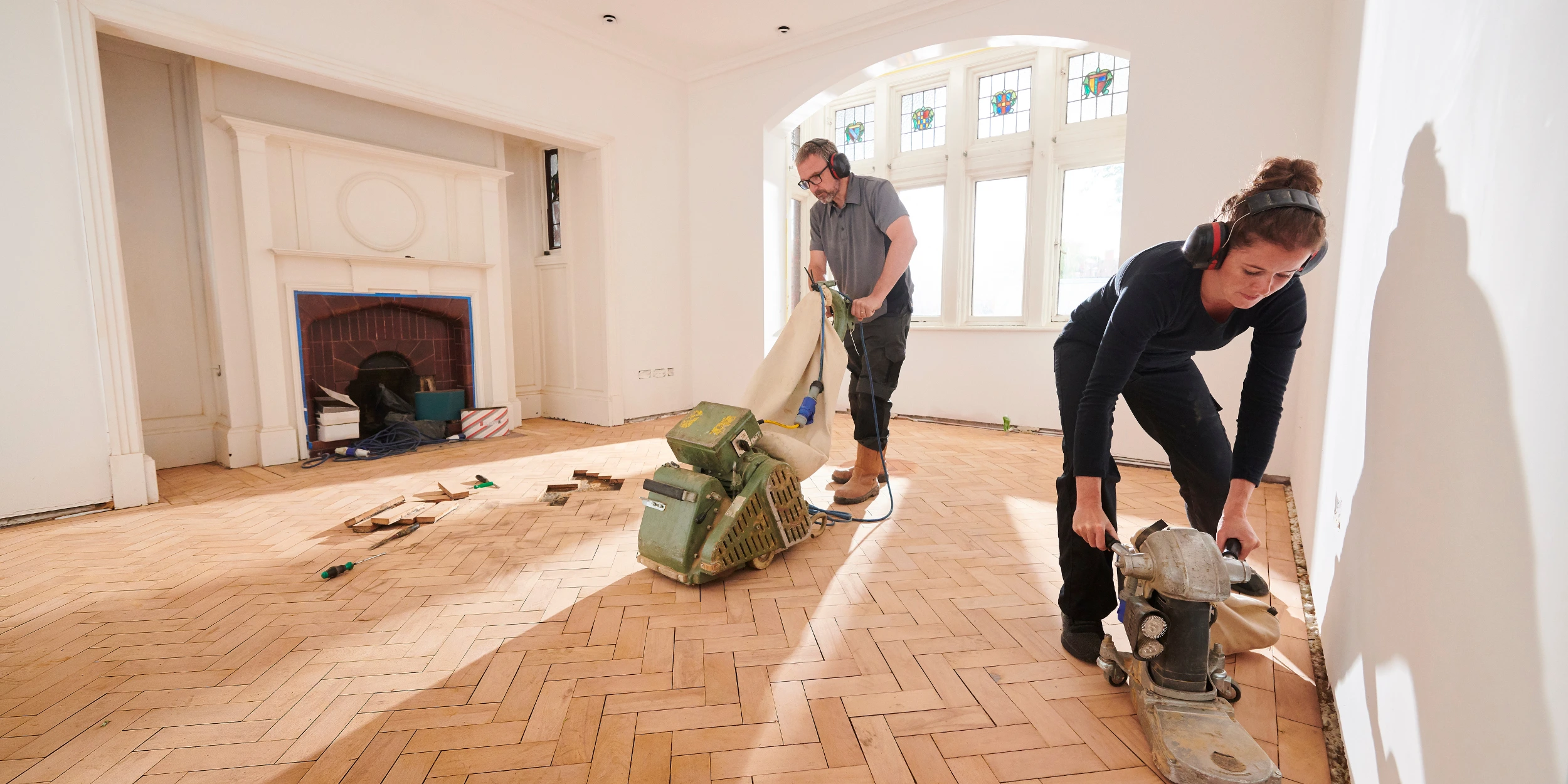
The large belt sander (drum sander) is used for large open surfaces. It produces the most dust, which is why it’s crucial that it be equipped with a high-performance suction system. The best machines on the market capture more than 90% of the dust generated at the source.
3. Edge and Corner Sanding with Edge Sander
The edge sander is used on the 8 to 10 cm (3.1″ to 3.9″) border inaccessible to the large sander. This machine proportionally generates more dust because its suction system is less efficient. This is often where most of the residual dust in a dustless job site comes from.
4. Finish Sanding with Orbital Sander
After the first two passes, we use an orbital sander with fine paper (120-150 grit) to even out the surface and prepare the wood to receive stain or varnish. This step produces very little dust because the wood is already well smoothed.
5. Cleaning Between Each Pass and Before Finishing
Between each grit pass and before applying the finish, we vacuum and carefully wipe the entire surface with slightly damp lint-free cloths. Any residual dust remaining under the varnish would create visible lumps and ruin the final result. This meticulous cleaning step is non-negotiable for a beautifully finished floor.
How Much Dust Really Remains After Dustless Sanding?
Let’s be transparent: even with the best equipment, there is always a fine film of dust in the treated room and sometimes a slight haze in poorly isolated adjacent rooms. We’re talking about dust visible only on black or shiny surfaces—not enough to warrant moving out.
In comparison, traditional sanding without suction leaves a layer of dust several millimeters thick on ALL furniture, surfaces, and sometimes even in closed cupboards. The difference is absolutely striking. Homeowners in Longueuil and Brossard who have experienced both methods unanimously confirm that dustless sanding is life-changing.
In practice, after professional dustless sanding, a good cleaning of the treated room is generally sufficient. No need to wash all the curtains, dust the books, and thoroughly clean the entire house as was the case with the old method.
Dustless Sanding vs. Traditional Sanding: Honest Comparison
Traditional Sanding (Without Suction)
- Abundant dust: fine film on all surfaces in the house
- Requires completely emptying adjacent rooms and protecting all furniture
- Very intensive post-job cleaning (2-3 days)
- Risks for people with allergies or asthma
- Generally lower cost for the contractor
Dustless Sanding (With High-Performance Suction)
- Dust reduction of 90 to 95% depending on equipment
- Post-job cleaning limited to the treated room
- Family can stay in the house (untreated rooms)
- Ideal for people sensitive to dust
- Slightly more expensive (contractor’s equipment investment)
What Cannot Be Avoided Even with Dustless Technology
There are physical realities that no technology can completely overcome. Here’s what you can expect even with the best equipment:
- A slight smell of fresh wood during and after the work—normal and harmless.
- The smell of varnish or stain during drying—this is the finish, not the sanding. Ventilate the room well.
- Fine residual dust in the tightest corners, under radiators, and in cracks between boards.
- Vibrations and significant noise during sanding—condo neighbors will be informed in advance.
How Long Must You Leave the House After Sanding?
For the sanding itself, you don’t have to leave the house—you can stay in untreated rooms. The restrictive part concerns the application of the finish (varnish, stain, oil). Depending on the product used:
- Water-based varnish (single-component): avoid walking on the floor for 3-4 hours between each coat. After the final coat, wait 24-48 hours before replacing furniture.
- Oil-alkyd varnish (oil-based urethane): longer drying time, between 8-12 hours per coat. Strong odor—better to leave overnight.
- Natural oil (Rubio Monocoat, Osmo): can be put back into service more quickly, but maintenance differs from varnish.
In the vast majority of South Shore projects, homeowners sleep in their house during the work. We simply ask them not to use the rooms being treated until the next morning.
Dustless Sanding: For What Type of Floor?
Sanding with suction is recommended (and often required) for the following types of wood:
- Solid hardwood flooring: white oak, maple, birch, pine—the most common in South Shore homes.
- Engineered wood flooring: if the finish layer is thick enough (minimum 3-4 mm) to allow sanding.
- Wood stairs: treads, risers, and stringers.
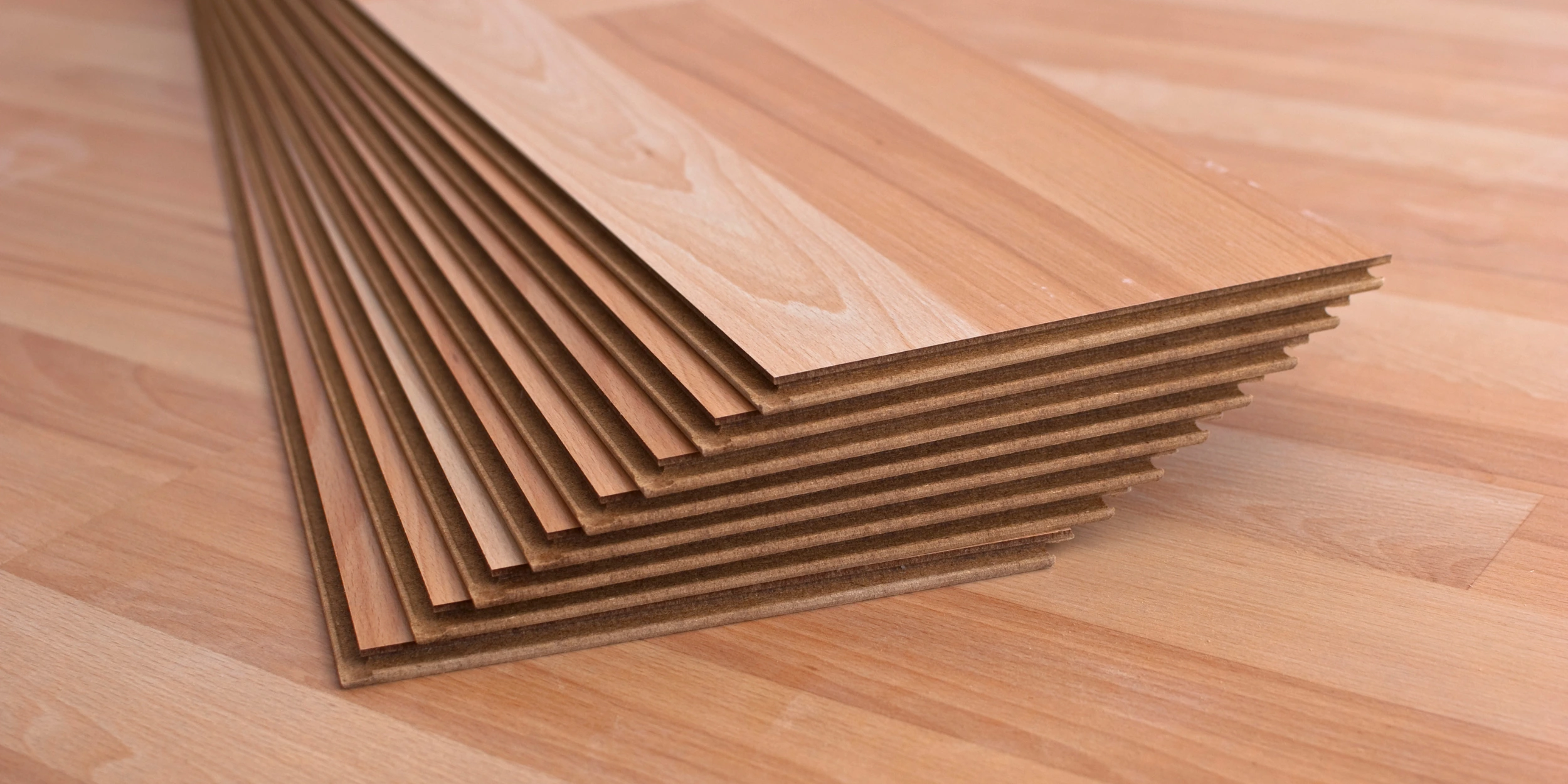
Warning: laminate (stratified) and SPC vinyl cannot be sanded—their surface layer is too thin and non-sandable. If your laminate floor is worn, it must be replaced rather than sanded.
Dustless Sanding Prices on the South Shore in 2026
Sanding rates with suction on the South Shore vary according to area, floor condition, and type of finish chosen. In 2026, here are the generally observed ranges:
- Sanding only (without finish): $1.50 to $2.50 per square foot depending on wood condition.
- Sanding + 2 coats of varnish: $3.00 to $4.50 per square foot.
- Sanding + stain + 2-3 coats of varnish: $4.00 to $6.00 per square foot.
- Standard staircase (12-14 steps): $600 to $1,200 all-inclusive.
These prices include travel on the South Shore (Brossard, Longueuil, Saint-Lambert, La Prairie). Always request a detailed written quote before committing.
Artisan Espace Design: Dustless Sanding Throughout the South Shore
At Artisan Espace Design, we have invested in the most high-performance equipment on the market to offer clean and professional sanding to our clients in Brossard, Longueuil, Saint-Lambert, and La Prairie. Our team masters all finishes—high-durability varnish, custom stain, natural oil—and ensures that your home is respected from the first sanding stroke to the final cleaning.
We offer a free quote and a consultation in our showroom to help you choose the perfect shade and finish for your floor. Because a beautiful floor starts with well-done sanding.
FAQ—Frequently Asked Questions About Dust-Free Sanding on the South Shore
How Long Does a Sanding Job Take on the South Shore?
For a main floor in an average single-family home (approximately 800-1,000 sq. ft.), allow 2 to 3 days of work: 1 day for sanding, and 1 to 2 days for finish coats with intermediate drying times. For smaller spaces (one or two rooms), sanding can be done in half a day and finishing in one additional day.
Can Children and Pets Stay in the House?
During active sanding, it is preferable that young children and pets not be in the treated room or in directly adjacent rooms. The noise is loud and even with high-performance suction, fine dust present in the air can irritate the respiratory tract. For distant rooms, there is no problem staying in the house.
Must the Room Be Completely Emptied Before Sanding?
Yes, absolutely. All furniture, rugs, and objects must be removed from the room before work begins. If you cannot move everything, our teams can sometimes work in two halves of the room—but this extends the job. Also remove curtains and blinds to prevent them from absorbing residual dust.
Can Only Part of the Floor Be Sanded?
Technically yes, but the result risks being uneven—the shade and shine of the sanded part will never perfectly match the old finish. For a uniform result, we recommend sanding and refinishing the entire surface of a room in one go. If your budget is limited, prioritize the most damaged rooms.
Does Sanding Remove All Scratches and Stains?
Most of them, yes. Sanding removes 1 to 3 mm (0″ to 1/8″) of surface material depending on the number of passes and grit used. Superficial scratches and surface stains disappear completely. However, deep stains (pet urine, standing water), burns, or significant cracks may require replacement of affected boards rather than simple sanding.
What Finish to Choose After Sanding: Oil, Varnish, or Stain?
Each finish has its advantages. Urethane varnish is the most durable and easiest to maintain—it forms a hard layer on the wood surface. Natural oil (Rubio Monocoat, Osmo) penetrates the wood and gives it a more matte and natural appearance—the wood remains more alive to the touch, but requires annual maintenance. Stain is added before varnish or oil to modify the wood color. Our team can show you samples in our Brossard showroom.
How Many Times Can a Hardwood Floor Be Sanded?
This depends on the thickness of the wood above the fasteners. A standard ¾” (19 mm) solid hardwood floor can be sanded 4 to 7 times over its lifetime depending on sanding aggressiveness. An engineered wood floor with a 4 mm (1/8″) top layer can be lightly sanded 1 to 2 times. During our free inspection, we assess the remaining thickness and tell you how many sandings remain in your floor.
Does Dustless Sanding Generate Vibrations in the House?
Sanding creates perceptible vibrations in the treated room and sometimes on the adjacent floor. These vibrations are harmless to the house structure, but can be uncomfortable if you try to work from home during the work. Plan sanding for a time when you can be away or work from another location, especially for the first day of rough sanding.
Can I Put My Rugs Back on the Floor After Sanding?
Wait at least 72 hours after the final coat of varnish before putting rugs back on the floor. Friction and heat generated by a rug on insufficiently cured varnish can create permanent marks. For natural oils, wait 5 to 7 days. First place a non-slip protective mat in undyed latex to avoid color transfer.
Must You Leave the House at Night During Sanding Work?
For sanding, no—residual dust presents no danger in the evening. For oil-based varnish finish (solvent-based), fumes can be unpleasant and slightly irritating the night following application. Most South Shore homeowners stay in their house and simply ventilate the treated room. If you are very sensitive to odors, plan to sleep at a friend’s place the first night after varnish application.
Conclusion: Clean Sanding Is an Investment Worth Making
Dust-free sanding is a technology that has revolutionized floor renovation projects on the South Shore. The difference in comfort and cleanliness compared to the traditional method is so significant that most of our clients don’t understand why some contractors still offer sanding without suction in 2026.
At Artisan Espace Design, every sanding job in Brossard, Longueuil, Saint-Lambert, or La Prairie is performed with our latest-generation dustless equipment. Your home is our priority as much as your floor. Contact us for your free quote.
Do you have a flooring project on the South Shore? Request a free quote from the Artisan Espace Design team.