Vous envisagez d’installer un piano à queue dans votre salon de Longueuil, de placer une bibliothèque pleine à craquer dans votre bureau, ou de déménager un réfrigérateur américain sans abîmer votre beau plancher de bois franc ? Ce sont des préoccupations légitimes que nos clients nous soumettent régulièrement à la salle montre d’L’Artisan Espace Design à Brossard. La question du poids plancher bois franc résistance revient souvent, et les réponses qu’on trouve en ligne sont trop souvent vagues ou imprécises.
La bonne nouvelle : un plancher de bois franc bien installé sur une structure solide est remarquablement résistant. La moins bonne nouvelle : ce n’est pas le plancher lui-même qui est le facteur limitant dans la grande majorité des cas, mais bien la structure de plancher en dessous. Voici tout ce que vous devez savoir pour faire les bons choix dans votre maison de la Rive-Sud.
Ce guide s’adresse autant aux propriétaires qui souhaitent mieux comprendre les limites de leur plancher actuel, qu’à ceux qui planifient une rénovation et veulent s’assurer que leur nouveau plancher de bois franc sera à la hauteur de leurs besoins.
Comprendre la résistance d’un plancher : deux réalités distinctes
Quand on parle du poids qu’un plancher peut supporter, il faut distinguer deux réalités bien différentes. D’un côté, il y a la résistance du bois franc lui-même en tant que matériau de surface, c’est-à-dire sa capacité à ne pas se creuser, se fissurer ou s’endommager sous une pression localisée. De l’autre côté, il y a la capacité portante de la structure du plancher, c’est-à-dire les solives, le sous-plancher et tout ce qui supporte le revêtement de surface.
Dans la vaste majorité des situations domestiques courantes, c’est la structure qui détermine la limite réelle. Un plancher de bois franc de 3/4 de pouce d’épaisseur posé sur un sous-plancher solide peut théoriquement supporter des charges considérables, mais si les solives sont sous-dimensionnées ou si la portée est trop grande, c’est la structure qui cédera en premier, bien avant que le bois se déforme.
Il faut aussi comprendre la distinction entre une charge répartie uniformément et une charge ponctuelle. Un piano de 300 kg dont le poids est réparti sur quatre pattes larges exerce une pression bien différente d’une commode lourde reposant sur quatre petites roues dures. C’est la pression par unité de surface (kPa ou kg/cm²) qui compte, pas seulement le poids total.
En code du bâtiment québécois, les planchers résidentiels sont dimensionnés pour supporter une charge d’utilisation uniforme d’environ 1,9 kPa (40 lb/pi²) à 2,4 kPa (environ 40 à 50 livres par pied carré). Cela représente le poids normal des occupants, des meubles et des effets personnels répartis sur toute la surface d’une pièce.
Quelle est la résistance propre du bois franc en surface ?
Le bois franc en tant que matériau de surface est évalué selon l’échelle de Janka, qui mesure la dureté d’une espèce de bois par la force nécessaire pour enfoncer une bille d’acier dans le bois. Plus le score Janka est élevé, plus le bois résiste aux indentations et aux égratignures.
- Érable dur (Acer saccharum) : 1 450 lbf — l’un des bois de plancher les plus durs disponibles au Québec.
- Chêne blanc : 1 360 lbf — excellent équilibre entre dureté et stabilité.
- Chêne rouge : 1 290 lbf — très populaire pour les planchers résidentiels.
- Noyer américain : 1 010 lbf — plus mou, mais très apprécié pour son esthétique.
- Pin blanc : 380 lbf — très mou, déconseillé pour les zones à fort trafic.
Pour les planchers de bois franc courants sur la Rive-Sud, les espèces comme l’érable, le chêne et le frêne offrent une résistance à l’indentation tout à fait satisfaisante pour une utilisation résidentielle normale. Les risques d’indentation permanente sous des meubles lourds restent faibles si des patins protecteurs adéquats sont utilisés.
Les limites réelles : quand faut-il s’inquiéter ?
Certains objets méritent une attention particulière en raison de leur poids concentré sur une petite surface. Les pianos à queue sont l’exemple classique : un piano de concert peut peser entre 200 et 480 kg. La charge se concentre sur trois à six pieds, ce qui peut représenter une pression de 40 à 80 kg par pied selon le modèle. Pour les maisons résidentielles standards de Brossard ou Longueuil construites après les années 1980, cela dépasse rarement les limites structurales d’un plancher correctement dimensionné.
Les aquariums représentent un risque souvent sous-estimé : un aquarium de 500 litres pèse environ 550 kg (eau et équipements), soit une charge considérable si la structure de plancher n’a pas été conçue pour ça. Les coffres-forts lourds (plus de 200 kg) peuvent également poser problème s’ils sont placés au centre d’une grande portée de solives.
Une bibliothèque murale pleine de livres peut facilement atteindre 300 à 400 kg. Si elle est placée le long d’un mur porteur, le problème est généralement moindre. Si elle est au centre d’une pièce à grande portée, il faut évaluer la situation. Dans les maisons de Saint-Lambert ou de La Prairie datant des années 1950 à 1970, une évaluation par un ingénieur en structure est conseillée avant d’installer des charges très importantes.
Ce dont on parle moins, c’est l’impact des charges dynamiques sur le plancher de bois franc. La pression d’un talon aiguille peut atteindre 150 kg/cm², soit plusieurs fois la pression qu’exercerait le même poids réparti sur toute la semelle d’une chaussure plate. C’est une des raisons pour lesquelles les planchers de bois franc tendres se marquent facilement malgré une résistance structurale tout à fait adéquate.
Comment protéger votre plancher de bois franc des charges lourdes ?
- Patins en feutre de qualité sous tous les pieds de meubles : les patins en feutre épais distribuent mieux la charge et éliminent les rayures. À remplacer régulièrement.
- Tapis ou carpettes sous les zones de forte charge : un tapis bien choisi sous un canapé lourd ou une table à manger répartit le poids sur une plus grande surface.
- Plateformes de distribution pour les charges très concentrées : pour un piano à queue ou un aquarium, une plateforme en contreplaqué épais (3/4 pouce) répartit le poids sur une surface beaucoup plus grande.
- Éviter les roulettes dures sur le bois franc : optez pour des roulettes larges en caoutchouc souple ou des patins.
- Humidité contrôlée : maintenez un taux d’humidité relative entre 35 % et 55 % dans la maison pour éviter les déformations saisonnières.
Le bois franc ingénieur vs. le bois massif : quelle différence en matière de résistance ?
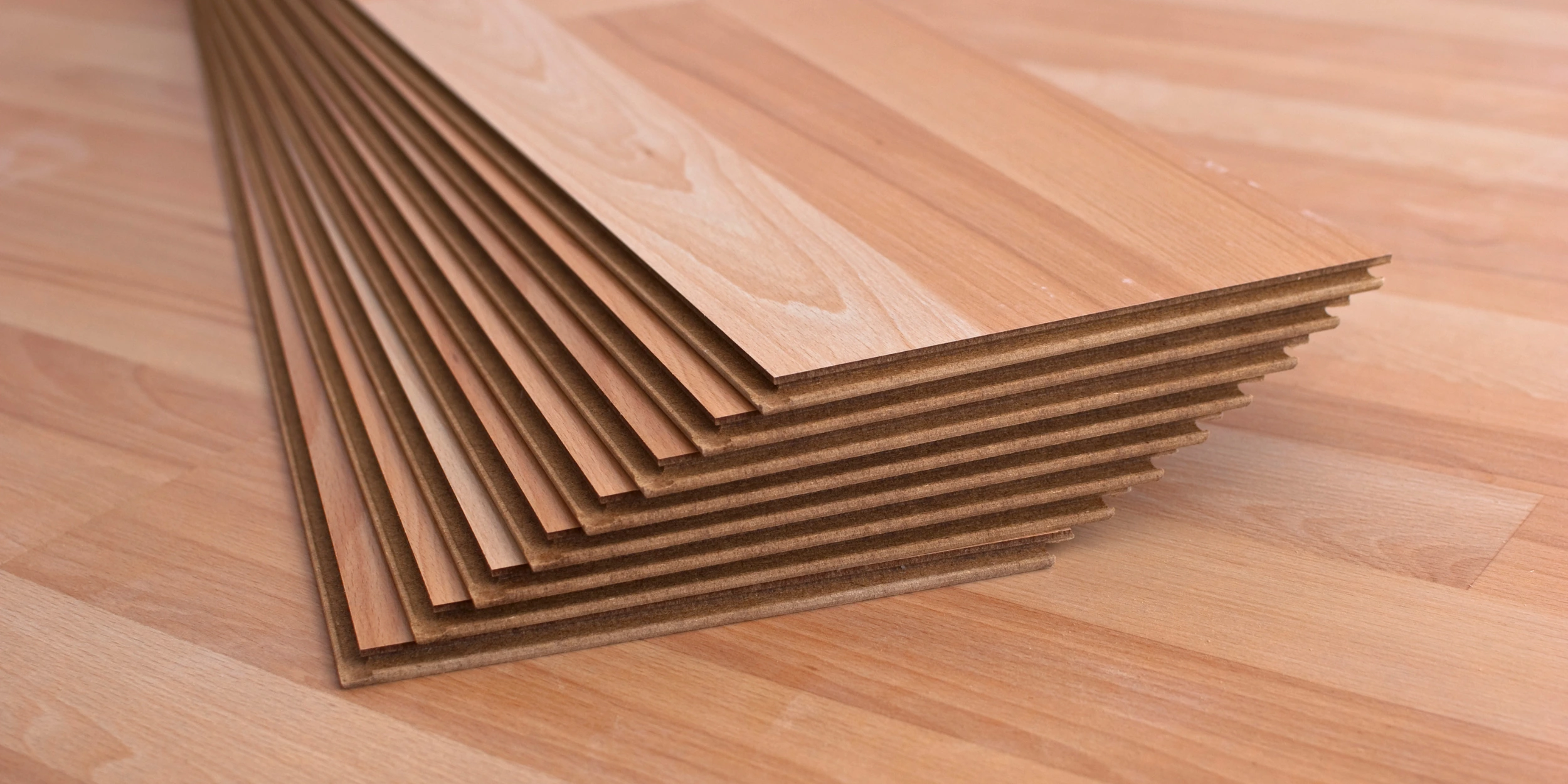
Le bois d’ingénierie se compose de couches de bois croisées (plis) avec un parement de bois naturel en surface. Sa structure laminée lui confère une excellente stabilité dimensionnelle face aux variations d’humidité, ce qui est un avantage réel dans notre climat québécois. En termes de résistance à la charge, le bois d’ingénierie se comporte de façon comparable au bois massif pour les charges courantes.
La différence principale réside dans la possibilité de sablage et de restauration : un bois massif de 3/4 pouce peut être sablé et refiné plusieurs fois au cours de sa vie, tandis qu’un bois d’ingénierie a un parement plus mince qui limite le nombre de refinitions possibles.
FAQ — Poids et résistance d’un plancher de bois franc sur la Rive-Sud
Combien de poids peut supporter un plancher de bois franc par pied carré ?
La norme québécoise pour les planchers résidentiels est d’environ 40 à 50 livres par pied carré (1,9 à 2,4 kPa) en charge uniforme. Pour des charges plus importantes et concentrées (piano, coffre-fort, aquarium), il est recommandé de consulter un professionnel pour évaluer la structure de plancher spécifique à votre maison.
Mon plancher de bois franc peut-il supporter un piano à queue ?
Dans la majorité des maisons résidentielles de la Rive-Sud construites selon les normes du code du bâtiment québécois, un piano à queue de taille normale (300 à 400 kg) peut être placé sans problème, à condition de le positionner perpendiculairement aux solives et de préférence près d’un mur porteur. Pour les pianos de concert très lourds (plus de 450 kg), une consultation avec un ingénieur en structure est recommandée.
Est-ce que les talons hauts abîment un plancher de bois franc ?
Oui, les talons aiguilles peuvent laisser des marques dans les bois plus tendres comme le pin ou le noyer. Les bois très durs comme l’érable résistent mieux, mais aucun bois n’est totalement invulnérable. Des protections de talons (embouts en caoutchouc) ou un tapis dans les zones à risque sont les meilleures précautions.
Peut-on poser un plancher de bois franc sur un sous-plancher en mauvais état ?
Non, et c’est un point essentiel. Le sous-plancher doit être sec, de niveau (moins de 3/16 po sur 10 pi) et structuralement solide avant la pose. Un sous-plancher déficient peut causer des craquements, des déformations, des joints qui s’ouvrent et ultimement une durée de vie réduite du plancher.
Un aquarium peut-il être installé sur un plancher de bois franc au sous-sol ?
Le sous-sol pose rarement un problème structurel pour les aquariums, car la dalle de béton est directement sur le sol. La problématique au sous-sol est plutôt l’humidité générée par l’aquarium, qui peut endommager le plancher de bois franc si des débordements surviennent. On recommande de placer un aquarium sur un plancher vinyle étanche au sous-sol plutôt que sur du bois franc.
Comment savoir si mon plancher est en train de souffrir d’une surcharge ?
Les signes d’un plancher sous stress excessif incluent des craquements persistants et nouveaux, un affaissement visible dans les zones de forte charge, des joints qui s’ouvrent entre les planches, ou une sensation de « mou » sous le pied à certains endroits. Si vous observez ces symptômes, contactez un professionnel pour évaluation.
La pose sur un chauffage radiant affecte-t-elle la résistance du bois franc ?
Le plancher chauffant augmente les variations dimensionnelles du bois franc. Pour optimiser la durabilité et la stabilité, on recommande d’utiliser des lames plus étroites (moins de 3 pouces), du bois d’ingénierie plutôt que du bois massif, et de maintenir une température de surface inférieure à 27°C. Les espèces à faible coefficient d’expansion comme le chêne ou le frêne sont préférables.
Est-ce qu’un plancher de bois franc bien entretenu peut durer 100 ans ?
Absolument. Les planchers de bois franc massif dans les maisons centenaires de Saint-Lambert et Longueuil en sont la preuve vivante. Un plancher de bois franc de 3/4 de pouce peut être sablé et refiné de 5 à 7 fois au cours de sa vie, prolongeant son existence pratiquement indéfiniment avec les bons soins.
Peut-on installer un plancher de bois franc sur un sous-sol avec des risques d’humidité ?
C’est déconseillé. Le bois franc massif est très sensible à l’humidité et peut gonfler, gauchir ou développer de la moisissure dans un sous-sol humide. Pour les sous-sols, on recommande plutôt le plancher vinyle SPC (imperméable) ou le bois d’ingénierie avec un bon pare-vapeur si les conditions le permettent.
Vous avez un projet sur la Rive-Sud ? Demandez une soumission gratuite à l’équipe d’L’Artisan Espace Design.